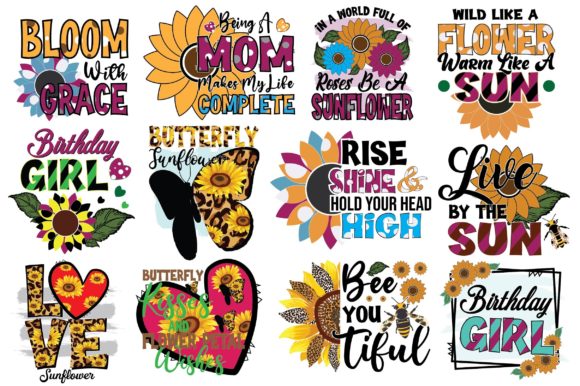
Sunflower Sublimation Bundle: A Designer’s Practical Review
As an embroidery designer who spends more time staring at stitch simulations than I care to admit, I approach every new digital embroidery file with a mix of curiosity and skepticism. We have all been there: you download a beautiful graphic, only to realize it collapses into a mess of thread breaks and puckering once it hits the fabric. Recently, I had the chance to evaluate the Sunflower Sublimation Bundle, and I want to share my honest take on how this collection translates from screen to needle.
The first thing that strikes you about this bundle is its visual warmth. Sunflowers are a perennial favorite in the craft world, but they can easily look cliché if not handled with care. This collection avoids the trap of generic clip-art aesthetics. The shapes are organic, and the layout feels balanced rather than cluttered. For those of us running a craft business or selling as an Etsy seller, visual appeal is the first hurdle. If the design does not catch the eye in a thumbnail, it will not sell. These graphics have that immediate "stop-scroll" quality, which is essential for any small shop product.
From Screen to Stitch: Real-World Application
I decided to test the versatility of these designs by imagining a specific client project: a custom embroidered tote bag for a local farmer’s market vendor. The goal was to create something durable, cheerful, and professional. When I looked at the Sunflower Sublimation Bundle, I immediately saw potential for a tote bag design. The bold outlines and vibrant color palette suggest a design that can hold its own against canvas or heavy cotton.
However, we must remember that this bundle is marketed with sublimation in mind, offering high-resolution PNG, JPG, SVG, and EPS files. As an embroiderer, I do not plug an SVG directly into my machine. Instead, I use these vector and raster files as the foundation for creating a proper machine embroidery design. The clarity of the source files is crucial here. Because the bundle includes 300 DPI images with transparent backgrounds, tracing and digitizing become significantly easier. Clean lines mean fewer unnecessary nodes in your digitizing software, which leads to smoother stitching and better stitch density control.
If you are not digitizing yourself and are using pre-made embroidery files derived from these graphics, the principle remains the same: look for clarity. A muddy source image results in a muddy embroidery file. The sharpness of these sunflower graphics suggests that any resulting applique design or fill-stitch version would retain its integrity. For a sweatshirt embroidery project, this means the petals won’t blur into a solid blob after washing.
Navigating Fabric and Hoop Constraints
While the aesthetic is strong, practical application requires caution. Sunflowers often involve intricate petal details and central seed patterns. In embroidery, tiny details are the enemy of efficiency and durability. If you are planning to use these designs on a baby embroidery item, such as a onesie or bib, you must simplify. A complex fill stitch area can feel stiff and uncomfortable against sensitive skin. I recommend converting detailed centers into simpler satin stitches or using an applique technique where the fabric provides the texture, reducing the overall thread count.
Another critical consideration is the hoop size. Many of these sunflower designs are expansive. Trying to cram a large floral arrangement into a 4x4 inch hoop will result in lost detail. For best results, use a 5x7 or larger hoop. This allows the design to breathe and ensures that the running stitch outlines remain distinct. Additionally, consider the fabric texture. On textured towels or waffle-weave fabrics, fine details may get lost. In such cases, bold outlines work better than subtle shading.
Dark fabrics present another challenge. While sublimation prints rely on light backgrounds, embroidery must stand out on any color. If you are stitching on a navy hoodie, ensure your thread colors have enough contrast. A bright yellow sunflower pops beautifully, but if the design relies on subtle gradients, it might disappear. Always test your design in black and white mockups first to check for value contrast.
Commercial Viability and Brand Consistency
For commercial embroidery professionals, consistency is key. Whether you are producing custom apparel for a boutique or creating personalized gift items for holiday sales, your finished product must look professional. The Sunflower Sublimation Bundle offers a cohesive look that can help build brand recognition. Imagine a line of kitchen towels, aprons, and pot holders all featuring variations of this sunflower theme. The uniformity in style creates a curated collection rather than a random assortment of items.
When selling on platforms like Etsy, the perceived value of your handmade product is tied to its presentation. High-quality source graphics allow you to create stunning printable mockup images for your listings. Even before the item is stitched, a realistic digital preview can drive buyer engagement. Use the included transparent PNGs to overlay the design on photos of blank garments. This helps customers visualize the finished product and increases trust in your shop.
Practical Notes for the Embroiderer
Before you commit to a full production run, follow these practical steps:
- Test on Scrap Fabric: Always stitch out a sample on the same material you intend to use for the final product. Check for puckering and registration issues.
- Check Stabilizer Requirements: Floral designs with large fill areas often require cut-away stabilizer to prevent distortion, especially on stretchy fabrics like jersey knits used in t-shirts.
- Verify Licensing: The product description mentions various file formats but does not explicitly detail commercial licensing terms for the embroidery files themselves. If you are creating design assets for resale or using them in mass-produced small business merchandise, confirm the license allows for commercial use of the finished physical items.
- Inspect Small Details: Zoom in on the digital file. Are there tiny isolated stitches? These can cause thread breaks. Clean up your digitizing file to remove unnecessary micro-stitches.
- Consider Washability: Items like holiday embroidery gifts or daily-use aprons will be washed frequently. Ensure your stitch density is not too high, which can cause perforation of the fabric over time.
In conclusion, the Sunflower Sublimation Bundle is a robust resource for designers who understand the bridge between graphic art and textile craft. It is not just a set of pretty pictures; it is a toolkit for creating tangible, sellable goods. Whether you are making a single embroidered patch for a friend or stocking your online store with T-Shirt Designs and home decor, these graphics provide a solid foundation. Just remember that the magic happens in the execution. Respect the limitations of your machine, choose your materials wisely, and let the natural beauty of the sunflower shine through your craftsmanship.