Reviewing World’s Okayest Dad Sublimation for Stitch
As a designer who spends half my life digitizing and the other half stitching, I have learned to look past the glossy preview images. We all know that what looks crisp on a screen does not always translate cleanly to thread. When I first pulled up the World’s Okayest Dad Sublimation file, my initial reaction was one of cautious optimism. The humor is timeless, the layout is balanced, and the typography has that casual, approachable weight that works well for Father’s Day projects. However, since this is technically a sublimation graphic intended for heat transfer, using it in an embroidery context requires a specific strategic approach. This review breaks down how this design performs when adapted for real-world stitching, helping you decide if it belongs in your next embroidery project.
First Impressions and Visual Personality
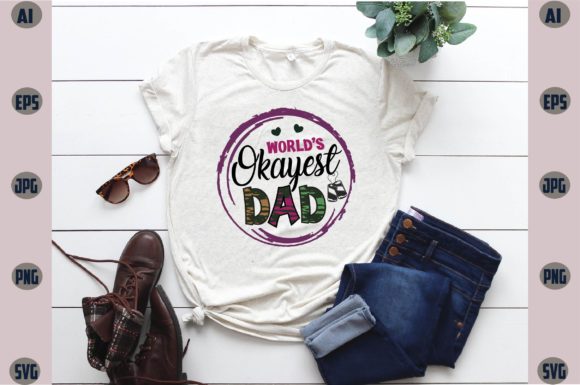
The mood of this design is playful and self-deprecating. It captures that specific dad-energy where humility meets pride. Visually, the graphics are eye-catching, with bold lines that suggest high contrast. For an embroiderer, this is good news. High-contrast elements usually mean better readability once stitched out. The quote is central, surrounded by supportive graphics that frame the text without overwhelming it.
When evaluating this as a potential machine embroidery design adaptation, I look at the negative space. There is enough breathing room between the letters and the border elements. This suggests that if you were to digitize this or use it as a reference for a patch, it would not turn into a dense puckered mess. The visual personality fits perfectly into the category of custom apparel and personalized gift items. It is not overly formal, which makes it ideal for casual wear like t-shirts, hoodies, and tote bags.
Real-World Application: The Sweatshirt Test
To truly test the viability of World’s Okayest Dad Sublimation, I imagined applying it to a mid-weight cotton fleece sweatshirt. This is a staple product for any Etsy seller or small shop product line during the spring season. The challenge here is the fabric texture. Fleece has a nap, which can swallow small details.
If you are using the provided PNG or JPG files to create a printed transfer before embroidering over it (a hybrid technique), the 300 DPI resolution is crucial. It ensures the print remains sharp under the needle. However, if you are digitizing this from scratch to create a pure embroidery file, you must consider stitch direction. The curved elements in the graphics would benefit from a fill stitch with a slight angle change to follow the contour, while the text should likely be handled with a clean satin stitch if the size permits, or a detailed running stitch outline if scaled down.
In this scenario, the design acts as a focal point. It does not need excessive embellishment. The strength of the piece lies in its simplicity. A customer buying this as a holiday embroidery gift wants something that feels handmade but professional. The bold nature of the graphic supports this, offering high visibility even from a distance.
Navigating Technical Constraints
While the design is strong, there are areas where caution is necessary. The product description mentions SVG and EPS files, which are vector-based and excellent for resizing. However, embroidery has physical limits. If you attempt to stitch this on a small hoop, such as a 4x4 inch cap hoop, the legibility of the "Okayest" text may suffer. Tiny lettering on textured fabrics like pique polo shirts or waffle-knit towels can become illegible.
I recommend checking the stitch density carefully if you are converting this graphic. Dense areas near the graphic borders could cause pulling on stretchy fabrics. For a tote bag design made of canvas, this is less of an issue because the fabric is stable. But for a baby embroidery project on a onesie, you must use a cut-away stabilizer and potentially reduce the density to keep the garment soft against sensitive skin.
Another consideration is the color palette. Sublimation designs often rely on gradients. Embroidery relies on solid thread colors. You will need to simplify the color scheme. Choose high-contrast thread combinations. For example, if stitching on a navy sweatshirt, use white or light gray thread for the text to ensure it pops. Avoid low-contrast combinations like beige on white, which will make the design disappear.
Commercial Viability and Brand Consistency
For commercial embroidery professionals and craft business owners, the appeal of World’s Okayest Dad Sublimation lies in its versatility. It fits seamlessly into a broader collection of family-themed goods. It pairs well with matching "World's Okayest Mom" or sibling designs, allowing you to create bundle listings. This increases the perceived value for the buyer and boosts your average order value.
When creating printable mockup images for your online store, remember that the digital file includes transparent backgrounds. This makes it easy to place the design on various product photos to show customers how it might look. However, always be transparent about the final product. If you are selling the stitched item, clarify that it is embroidery, not sublimation, unless you are doing a hybrid print-and-stitch method. Misleading customers can hurt your brand consistency and trust.
The design also works well for embroidered patch production. Patches are a trending item in the design assets market. Because the graphic is contained within a clear boundary, it can be easily die-cut or merrow-edged. A patch allows the customer to apply the design to multiple items, increasing the utility of your finished product.
Practical Designer Notes for Execution
Before you commit to a large batch of production, follow these practical steps to ensure quality:
- Test on Scrap Fabric: Always run a test stitch-out on the same material you plan to use for the final product. Check for registration issues between colors.
- Check Thread Contrast: View your design in black and white. If the elements blend together, adjust your thread choices to create more separation.
- Verify Licensing: The product description mentions you get uncut files, but always confirm the license terms. Ensure you have commercial rights to sell the physical embroidered items if that is your intent.
- Inspect Small Details: Zoom in on the SVG or EPS files. Look for nodes or anchor points that might cause jagged edges if not smoothed out during digitizing.
- Consider the Hoop Size: Ensure your machine’s hoop can accommodate the full width of the design without re-hooping, which can lead to alignment errors.
In conclusion, World’s Okayest Dad Sublimation is a robust graphic with strong potential for embroidery adaptation. It offers a blend of humor and style that resonates with buyers looking for personalized gifts. By paying attention to stitch density, fabric choice, and color contrast, you can transform this digital asset into a high-quality handmade product that stands out in a crowded market. Whether for a sweatshirt embroidery line or a custom apron collection, this design delivers the visual impact needed to drive engagement and sales.