Reviewing the Real Not Perfect Smiley Face Retro Svg
As a designer who has spent countless hours digitizing and stitching out files for clients, I have learned that the difference between a charming handmade item and a messy disaster often comes down to the source file. When I first opened the Real Not Perfect Smiley Face Retro Svg, my immediate reaction was one of cautious optimism. The "imperfect" aesthetic is trending heavily in the world of T-Shirt Designs and home decor, but translating that wobbly, hand-drawn vibe into thread requires a keen eye for detail.
This review is not just about whether the file opens correctly. It is about how this specific graphic performs when put under the needle, how it translates from a digital Graphics asset to a tangible embroidery project, and whether it holds up in real-world commercial applications. If you are an Etsy seller, a boutique owner, or a hobbyist looking to elevate your custom apparel, here is my practical breakdown of using this design.
First Impressions and Visual Personality
The mood of the Real Not Perfect Smiley Face Retro Svg is instantly nostalgic. It captures that late-90s, early-2000s doodle aesthetic that feels personal and unpolished in the best way possible. Unlike rigid, vector-perfect smileys, this design embraces irregular lines and organic shapes. For an embroidery designer, this is both a blessing and a challenge. The irregularity helps hide minor stitching inconsistencies, but it also means you cannot rely on standard geometric alignment.
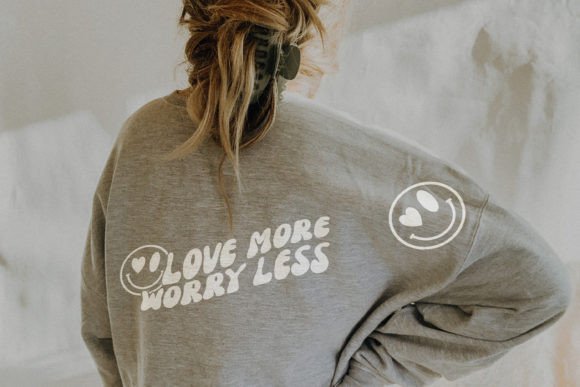
The package includes a ZIP folder with two distinct elements: a design quote and a smiley specifically sized for the sleeve. This separation is crucial. Many sellers bundle assets without considering placement, but having a dedicated sleeve element suggests the creator understands garment construction. The SVG format ensures compatibility with Cricut Explore, Silhouette Designer Edition, Adobe Suite, Inkscape, and Corel Draw, while the DXF file caters to Silhouette users. However, since these are primarily cut-file formats, those of us doing machine embroidery must approach them with a specific workflow in mind.
Real-World Application: The Sweatshirt Test
To truly evaluate this asset, I visualized it on a heavy-weight cotton sweatshirt. This is a staple product for any craft business. I imagined placing the main smiley face on the left chest area and the smaller sleeve quote on the upper arm. The retro vibe pairs exceptionally well with muted, earthy thread colors like mustard yellow, burnt orange, or sage green. Using a satin stitch for the outline would give it a premium feel, while a fill stitch might make the small details look too dense and stiff.
For a personalized gift or a small shop product, this design works because it feels approachable. Customers are increasingly drawn to items that look handmade rather than mass-produced. The "not perfect" nature of the smiley aligns perfectly with the ethos of the handmade product market. It signals authenticity. When I consider using this for a tote bag design, the simplicity of the shape ensures it remains legible even from a distance, which is vital for wearable advertising or statement pieces.
Navigating Technical Challenges
Here is where experience matters. Since the provided files are SVG and DXF, they are vector paths intended for cutting or printing, not necessarily pre-digitized embroidery files with defined stitch types. If you are using these as references to create your own machine embroidery design, you must pay attention to stitch density. The wobbly lines of the retro style can trap threads if the density is too high, leading to puckering on lightweight fabrics.
I advise testing this design on scrap fabric first. Pay close attention to curved surfaces. If you are applying this to a cap or a structured hat, the irregular lines need to be stabilized properly to prevent distortion. For baby embroidery projects, such as onesies or bibs, ensure that any small text elements from the quote design are large enough to be stitched clearly. Tiny lettering often becomes illegible after washing, which can hurt your brand reputation as an Etsy seller.
Also, consider the fabric texture. On a fluffy towel or a textured knit, fine details get lost. The bold nature of the smiley face helps here, but the accompanying quote might need simplification. Always check thread color contrast. A light thread on dark fabric requires a different stabilizer strategy than dark thread on light fabric. Using a cut-away stabilizer for stretchy garments like t-shirts is non-negotiable to maintain the integrity of the finished product.
Commercial Viability and Brand Consistency
For those running a commercial embroidery operation, consistency is key. The Real Not Perfect Smiley Face Retro Svg offers a versatile asset that can be adapted across various products, from aprons to pillow covers. Its retro appeal fits well with current trends in holiday embroidery and casual wear. However, before selling finished items, you must confirm the licensing terms. While the file format suggests broad compatibility for design software, commercial use rights for embroidery should always be verified with the creator.
Using this design in your printable mockup previews can significantly boost buyer engagement. The recognizable smiley face draws the eye, while the retro font adds character. It helps establish brand consistency if your shop focuses on vintage or playful aesthetics. Just remember that what looks good on screen needs to hold up in the wash. Test your embroidered patch or direct stitch for durability. If the threads snag or the fabric puckers, the charm of the "imperfect" look quickly turns into a perception of poor quality.
Final Designer Notes
Before you commit to a full production run, take these practical steps. First, digitize the SVG carefully if you are converting it yourself, ensuring smooth node placement to avoid jagged stitches. Second, compare how the design looks in black and white mockups to ensure the contrast is sufficient for visibility. Third, consider the hoop size. The sleeve design is small, so ensure your machine can handle the precise placement required for arm embroidery.
The Real Not Perfect Smiley Face Retro Svg is a strong candidate for designers who value personality over precision. It bridges the gap between digital ease and handmade charm. Whether you are creating a wedding gift, stocking your online store, or making a unique piece for a friend, this design offers a solid foundation. Just respect the technical limits of your machine and fabric, and you will find that this retro smiley brings a genuine warmth to your custom apparel and decor items.