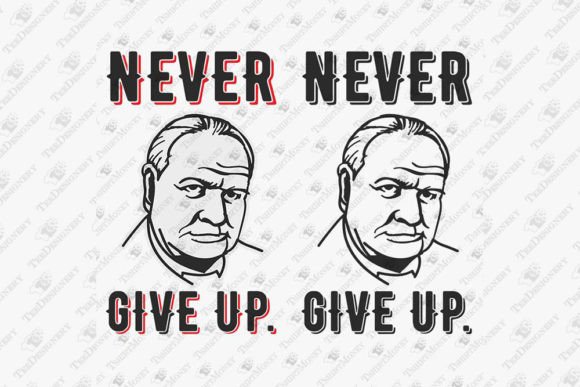
Reviewing the Never Give Up Churchill Quote
As a designer who has spent countless hours digitizing and stitching text-based motifs, I approach every new machine embroidery design with a mix of curiosity and skepticism. Text is notoriously difficult to get right in embroidery. Unlike simple shapes or floral patterns, lettering requires precise spacing, consistent stitch angles, and a keen eye for readability at various sizes. When I first loaded the Never Give Up Winston Churchill Quote into my software, my primary concern was not just the aesthetic appeal, but its structural integrity once it hit the fabric.
This particular piece falls under the category of T-Shirt Designs and general Graphics, but its utility extends far beyond a simple tee. The quote itself carries a weight of historical resilience, which demands a design that feels sturdy and confident. In this review, I am evaluating this asset not just as a digital file, but as a component of a real-world embroidery project. I want to know how it behaves on a hoop, how it reads from a distance, and whether it adds genuine value to a handmade product.
First Impressions and Visual Personality
The immediate mood of the Never Give Up Winston Churchill Quote is one of understated strength. It does not rely on excessive flourishes or overly complex serif details that often turn into thread nests during stitching. Instead, the layout appears clean and direct. For an Etsy seller or a craft business owner, this clarity is crucial. Customers browsing online thumbnails need to read the message instantly. If the letters are too close together or the font is too thin, the design fails its primary purpose: communication.
From a design perspective, the visual personality here is versatile. It lacks the rigid formality of some historical quotes, making it approachable for modern home decor or casual apparel. However, it retains enough dignity to be taken seriously. This balance is rare in pre-made design assets. Many similar files lean too heavily into decorative scripts that sacrifice legibility, or they use blocky, industrial fonts that feel cold. This design sits comfortably in the middle, offering a human touch that aligns well with the ethos of the maker community.
Real-World Application: The Sweatshirt Test
To truly test the viability of this design, I simulated a common scenario for small shop owners: creating a custom apparel item for a client seeking motivation. I chose a mid-weight cotton blend sweatshirt, a popular item for personalized gifts and boutique merchandise. The goal was to place the quote across the chest, a standard position for maximum visibility.
When working with text-based embroidery files, the choice of stitch type is critical. A design like this likely utilizes a combination of satin stitch for smaller elements or outlines and fill stitch for larger letter bodies, though this depends on the specific digitization. On the sweatshirt, the texture of the fabric played a significant role. The pile of the fleece can sometimes swallow fine details. Fortunately, the bold nature of the Never Give Up Winston Churchill Quote meant that the letters remained distinct. The contrast between the thread and the fabric was sharp, ensuring the message popped without needing excessive density.
This experience highlights why understanding your material is as important as choosing the right graphic. For a tote bag design, where the canvas is tighter and smoother, the same design would appear crisper, allowing for potentially finer details if the digitization supports it. For a baby embroidery project, such as a onesie, one must be cautious. The back of the embroidery can feel scratchy against sensitive skin. In such cases, using a soft stabilizer and ensuring the design is not overly dense is essential for comfort.
Navigating Technical Challenges
While the design is robust, there are areas where caution is necessary. Any experienced embroiderer knows that small hoop sizes can distort text if the scaling is not handled correctly. If you attempt to shrink the Never Give Up Winston Churchill Quote to fit a 4x4 inch hoop for an embroidered patch or a pocket detail, you risk losing the separation between letters. The threads may merge, turning distinct characters into an unreadable blob. Always check the minimum recommended size before committing to a small hoop size.
Furthermore, consider the fabric texture. On highly textured materials like terry cloth towels or rough linen, the edges of the letters might appear jagged if the stitch count is too low. Conversely, on stretchy fabrics like jersey knits used in t-shirts, proper stabilization is non-negotiable. Without a cut-away stabilizer, the fabric may pucker around the text, distorting the message and ruining the professional look of the finished product.
Dark fabrics present another challenge. If you are stitching white or light-colored thread on a black garment, the background fabric showing through the stitches can reduce contrast. In these instances, testing different thread colors is vital. Sometimes, a slight off-white or cream reads better than pure bright white, reducing glare and improving readability. It is also wise to test the design in black and white mockups to ensure the shape holds up even without color differentiation.
Commercial Viability and Brand Consistency
For those running a small shop product line or selling on platforms like Etsy, the commercial potential of this design is strong. Motivational quotes are evergreen sellers. They appeal to a wide demographic, from students to professionals. The Never Give Up Winston Churchill Quote fits seamlessly into collections focused on resilience, history, or leadership. It can be marketed as part of a holiday gift guide for graduates or new entrepreneurs.
However, professionalism is key. A sloppy stitch-out reflects poorly on your brand. Before listing this as a commercial embroidery item, perform rigorous quality checks. Ensure that the jump stitches are trimmed and that the backing is neat. Customers associate the quality of the embroidery with the value of the item. A clean, well-executed stitch pattern builds trust and encourages repeat business.
It is also important to verify the licensing terms. While the quote itself is historical, the specific digital arrangement and the accompanying file formats may have usage restrictions. Always confirm whether the license allows for unlimited physical sales or if there are caps on production. This due diligence protects your craft business from potential legal issues down the line.
Practical Designer Notes for Best Results
To get the most out of this design, follow these practical steps:
- Test on Scrap Fabric: Never stitch directly on your final garment. Use a similar fabric scrap to check tension and registration.
- Check Thread Contrast: Ensure your thread color stands out against the fabric background for maximum readability.
- Review Stitch Density: If the design feels too stiff, consider adjusting the density settings in your software if you have the editable file, or choose a lighter fabric.
- Confirm Hoop Size: Make sure your hoop can accommodate the full width of the quote without re-hooping, which can cause alignment issues.
- Inspect Small Details: Zoom in on the digital preview to check for tiny gaps or overlapping paths that might cause thread breaks.
- Use Proper Stabilizer: Match the stabilizer to the fabric weight. Heavy fabrics may need less support, while knits require robust stabilization.
- Verify Licensing: Double-check the terms for selling finished items to ensure compliance with the creator's rules.
In conclusion, the Never Give Up Winston Churchill Quote is a solid addition to any designer’s library. It offers a blend of historical gravitas and modern simplicity that works well across various applications, from sweatshirt embroidery to home decor. By paying attention to technical details like fabric choice, stabilization, and stitch quality, you can transform this digital file into a high-value personalized gift or a standout item in your boutique inventory. It is a reminder that in both embroidery and life, attention to detail and persistence yield the best results.