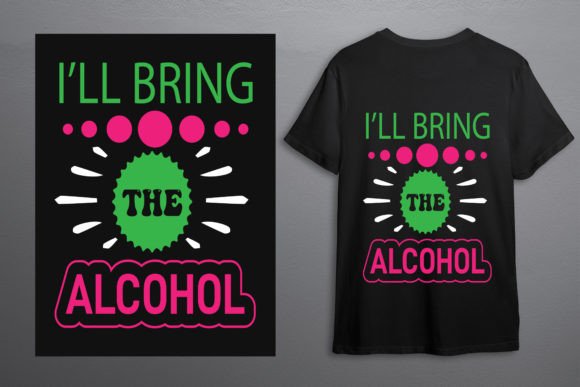
Review: Funny Sing SVG "I'll Bring the Alcohol"
As a designer who spends more time staring at stitch previews than actual fabric, I have learned that not every cute graphic translates well to thread. We often get swept up in the visual appeal of a digital mockup, only to realize later that the design is a nightmare to hoop or looks messy once stitched out. That is why I approach every new machine embroidery design with a healthy dose of skepticism and a stack of scrap fabric. Recently, I pulled up the FUNNY Sing Svg - I’ll Bring the Alcohol to evaluate its potential for real-world projects. This isn’t just about whether it looks good on a screen; it is about whether it holds up under the needle.
First Impressions and Visual Personality
The first thing that strikes you about this design is its attitude. It is bold, unapologetic, and clearly aimed at an adult audience who appreciates a bit of humor in their wardrobe. The layout is straightforward, which is often a blessing in embroidery. Complex, overly detailed graphics can turn into a tangled mess of thread breaks and bird nests, but this design relies on strong shapes and clear typography. The mood it creates is casual and fun, making it an ideal candidate for social gatherings, bachelorette parties, or just everyday wear for someone with a dry sense of humor.
From a technical standpoint, the balance between text and any accompanying graphical elements seems well-considered. In embroidery, negative space is just as important as the stitches themselves. If a design is too dense, the fabric puckers. If it is too sparse, it looks cheap. This design appears to hit a sweet spot, offering enough coverage to be visible without overwhelming the garment. It feels like a modern T-Shirt Designs asset that has been adapted with embroidery in mind, rather than a print graphic forced into a digitized format.
Real-World Application: The Tote Bag Test
To truly test the viability of the FUNNY Sing Svg - I’ll Bring the Alcohol, I imagined a specific scenario: a custom order for a set of reusable tote bags for a bridal party. This is a common request for Etsy sellers and craft business owners. Tote bags are usually made of canvas or heavy cotton, which provides a stable base for stitching. However, they also have seams and handles that can interfere with hooping.
In this context, the design’s simplicity works in its favor. A complicated applique design might require too much trimming and positioning time, driving up the labor cost per unit. This design, likely utilizing a mix of fill stitch for larger areas and satin stitch for borders or text, allows for faster production. The clarity of the message ensures that even from a distance, the joke lands. For a personalized gift or a small shop product, immediate recognizability is key to customer satisfaction.
Versatility Across Product Lines
Beyond tote bags, this design has legs in several other categories. Consider sweatshirt embroidery. A crewneck sweatshirt provides a thick, forgiving surface that handles stitch density well. Placing this design on the left chest or centered on the back could create a trendy, streetwear-inspired look. For custom apparel aimed at younger demographics, the humor aligns perfectly with current trends in ironic fashion.
However, caution is needed when applying this to smaller items. While it might work on a large embroidered patch, shrinking it down for a baby onesie or a small pocket would be a mistake. The text "I’ll Bring the Alcohol" requires a certain minimum size to remain legible. If the letters become too small, the stitches will merge, and the message will be lost. This is a crucial consideration for design assets intended for multiple uses. Always check the recommended minimum size before committing to a small hoop.
Technical Considerations for Stitching
When working with any digital file, understanding the underlying structure is vital. The package includes SVG, PNG, EPS, and DXF formats, which suggests versatility for both cutting machines and embroidery software. However, for embroidery specifically, you must ensure you are using the correct file type compatible with your machine. Most modern machines read PES, DST, or JEF files, so you may need to convert or ensure your software supports the provided formats.
Stitch density is another critical factor. If the design uses heavy fill stitches without proper underlay, it can cause distortion, especially on stretchy fabrics like jersey knits. I always recommend testing on a scrap piece of the same fabric you intend to use for the final finished product. Use a cut-away stabilizer for stretchy materials to prevent the design from warping after washing. For woven fabrics like cotton or linen, a tear-away stabilizer might suffice, but testing is non-negotiable.
Thread color choice can make or break this design. Since the message is humorous and bold, high contrast is essential. White thread on a black hoodie, or bright neon on a dark navy tee, ensures maximum readability. Avoid low-contrast combinations, such as light gray on white, which will render the text invisible from a distance. Think about how the thread colors interact with the fabric texture. A matte thread on a shiny satin fabric might look disjointed, whereas a glossy rayon thread on cotton can add a nice pop.
Navigating Potential Pitfalls
While the design is strong, there are areas where careful handling is required. Curved surfaces, such as caps or hats, present a challenge. Hooping a cap requires a specialized fixture, and the curvature can distort wide designs. If you plan to use this on headwear, ensure the design width fits within the usable area of the cap front without wrapping around the sides. Additionally, avoid placing it too close to the seam where the brim attaches, as this can cause needle deflection.
Another consideration is washability. Items like kitchen towels or aprons undergo frequent washing and drying. Ensure that the stitch count and density are appropriate for durable goods. A design that looks great initially but unravels after three washes will damage your reputation as a commercial embroidery provider. Always follow care instructions for the specific thread and fabric combination you choose.
Commercial Viability and Brand Consistency
For digital product sellers and handmade product creators, the commercial license terms are paramount. Before selling items made with the FUNNY Sing Svg - I’ll Bring the Alcohol, verify the licensing agreement included in the zip file. Some designers allow unlimited physical sales but restrict digital redistribution. Understanding these boundaries protects your business and respects the original creator’s rights.
From a branding perspective, this design fits well with shops that specialize in quirky, adult-oriented gifts. It adds personality to your portfolio and can attract customers looking for unique conversation starters. Using high-quality printable mockup images in your online listings can help customers visualize the final product, increasing conversion rates. Show the design on various items—totes, tees, and pillows—to demonstrate its versatility.
Final Verdict
The FUNNY Sing Svg - I’ll Bring the Alcohol is a solid addition to any designer’s library, provided it is used with intention. It excels in contexts where humor and boldness are valued, such as party gear, casual wear, and novelty gifts. Its simplicity aids in production efficiency, making it suitable for small batch runs or custom orders. However, success depends on proper technical execution: choosing the right stabilizer, testing stitch density, and ensuring adequate size for legibility.
For hobbyists and makers, this design offers a fun project that yields impressive results with moderate effort. For small business owners, it represents a viable product line item that can drive engagement and sales. Just remember to respect the material limits, check your file compatibility, and always stitch a test sample. When done right, this design delivers exactly what it promises: a laugh, a statement, and a professionally finished look.